Dream Companion Review 2026: Character Building, Voice Calls & Honest Verdict
Dream Companion puts the character builder before the conversation: you design her look and temperament first, then start chatting. Here is what the platform actually offers, and what the design is doing to you while you use it.

Table of contents
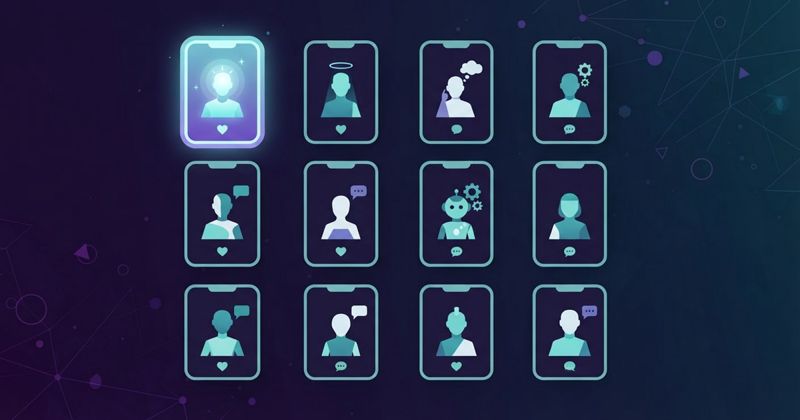
Dream Companion is an AI companion platform built around a simple inversion of the usual flow: instead of picking a character from a catalogue and starting a conversation, you build the character first — appearance, personality, temperament — and only then does the chat begin.
That ordering is the product's defining choice, and it is worth understanding before you decide whether the platform is for you.
Who Dream Companion is for
It suits people who want a companion that feels specifically theirs rather than one selected from a shared library. If you have tried catalogue-driven platforms and found the characters generic, the build-first approach is the direct answer to that complaint.
It is an adult, 18+ platform. It is not a general-purpose assistant, and it is not aimed at anyone looking for a productivity tool with a friendly personality attached.
What it offers
| Feature | What it means in practice |
|---|---|
| Full character customization | Appearance and temperament configured before the first message |
| Image & video generation | Unrestricted generation of your character, on demand |
| Live AI voice calls | Real-time spoken conversation rather than text only |
| Premium language model | The conversational quality is the platform's main selling point |
| 20+ languages | Usable well beyond English-speaking users |
| Announced additions | A live mode and a character-discovery roulette are listed as coming |
Monetization runs on two tracks: a subscription, plus usage-based spending on generated photos, videos and premium features. That second track matters more than it first appears — see below.
The character builder is the product
Most companion platforms treat customization as a settings screen. Here it is the onboarding.
The effect is real and worth naming plainly: by the time you send the first message, you have already invested effort in something you made. Psychologists call this the endowment effect — we value things more highly once we consider them ours, and we value them more still when we built them ourselves.
That is not a criticism of the feature. It genuinely produces a companion that fits what you wanted rather than an approximation. But you should go in aware that the design is deliberately front-loading attachment, and that attachment is what the rest of the product is built to monetize.
Voice calls
Live AI voice is the feature most likely to determine whether you find the platform worth paying for. Text companions have a natural ceiling — the interaction is always mediated by typing, which keeps a certain distance. Voice removes that distance, which is exactly why it works and exactly why it is the feature to be deliberate about.
Latency and voice quality are what separate a convincing call from an uncanny one. Test this early in any trial rather than after you have committed to a longer plan.
Image and video generation
Generation is unrestricted and tied to the character you built, which is a meaningful difference from platforms where generated images only loosely resemble your companion.
The practical consideration is cost structure. Usage-based spending means the more the platform succeeds at engaging you, the more you spend — and unlike a flat subscription, there is no natural ceiling. Anyone who has spent time in free-to-play mobile games will recognise the shape of it.
Set your own limit before you start, not after. This is the single most useful piece of advice for any platform on this model.
What to check before paying
- What the subscription actually includes, and what is billed on top. On usage-based platforms this distinction is where surprises live.
- Whether generation credits expire. Some platforms reset unused allowances monthly.
- How cancellation works — from inside the account, or only by contacting support. Check this before subscribing, not when you want to leave.
- What happens to your character and conversation history if you stop paying. If you have invested hours building and talking to a companion, whether it survives a lapsed subscription is a fair question.
- The privacy policy on conversation data. These are intimate conversations. Whether they are used for model training, and whether you can delete them, is worth two minutes of reading.
How it compares: see where Dream Companion sits next to the other apps we have tested in our best AI girlfriend apps 2026 ranking. Prefer flat pricing or a real free tier? We list seven Dream Companion alternatives.
Verdict
Dream Companion is a well-executed version of a familiar category, and the build-first flow is a genuine differentiator rather than a reskin. If the appeal of an AI companion is that it feels like yours, this is one of the more direct routes to that.
The reservations are structural rather than specific to this platform. Usage-based monetization on top of a subscription means costs scale with how much you enjoy it, and the design is explicitly engineered to create attachment before the first payment. Both are fine if you go in with your eyes open and a number in your head.
If you want to compare against the catalogue-first approach, we have covered OurDream.ai and Candy AI, both of which start from a library rather than a builder.
A note on expectations
An AI companion is a product, not a relationship, and the better ones are better precisely because they are more convincing at blurring that line. Enjoy it for what it is. If you notice it is displacing rather than supplementing contact with people, that is worth paying attention to — and if it stops being enjoyable and starts feeling compulsory, that is the point to step back.